Home & Robots
Robot Dogs You Can Buy in 2026: Prices and What They Do
Quick answer
Three robot dogs are on sale in 2026, and they are very different machines. Unitree's Go2 starts at $1,600 and suits hobbyists and researchers. Sony's aibo costs $3,199.99 on its U.S. store and needs a $300-a-year cloud plan after year three. Boston Dynamics' Spot is an industrial robot with no public price: you contact sales.
On this page
- What counts as a robot dog you can buy?
- How much is the Unitree Go2, and what does it do?
- What does the Sony aibo cost, and what do you get?
- Can you buy Boston Dynamics' Spot?
- How do the three compare side by side?
- What can't a robot dog do yet?
- Which robot dog fits which buyer?
- What should you check before paying for a robot dog?
- FAQ
- Sources
Search for "robot dog" and three very different machines come up under one name: a $1,600 hobby robot from China, a pet from Sony and a yellow industrial robot that Boston Dynamics sells through a sales team. The videos make them look alike. The prices, the running costs and the jobs they can do are not alike at all.
Everything below is taken from the makers' own pages and press statements, opened on Nov. 2, 2026, plus three independent reviews. I could not open Sony's U.S. store directly, so its price comes from the Internet Archive's saved copy of that page from October 2026. Sources and dates are at the end.
What counts as a robot dog you can buy?
A robot dog is a four-legged robot that walks, balances and recovers on its own. I kept this guide to three because each has an official page and a way to buy it today: Unitree's Go2, Sony's aibo and Boston Dynamics' Spot. They fall into three groups. The Go2 is a platform for tinkering, learning and research. The aibo is a companion built to feel like a small pet. Spot is a work tool for inspecting factories, sites and plants.
How much is the Unitree Go2, and what does it do?
Unitree's online shop lists four versions. The Air is $1,600, the Pro is $2,800 and the X is $4,500. The top version, the EDU, has no price: Unitree's page says to contact a sales expert. Unitree's table states these prices exclude tax and freight. The shop sells the Air and Pro with or without the remote controller (the Air is $1,850 with it, the Pro $3,050), and the controller alone is $300.
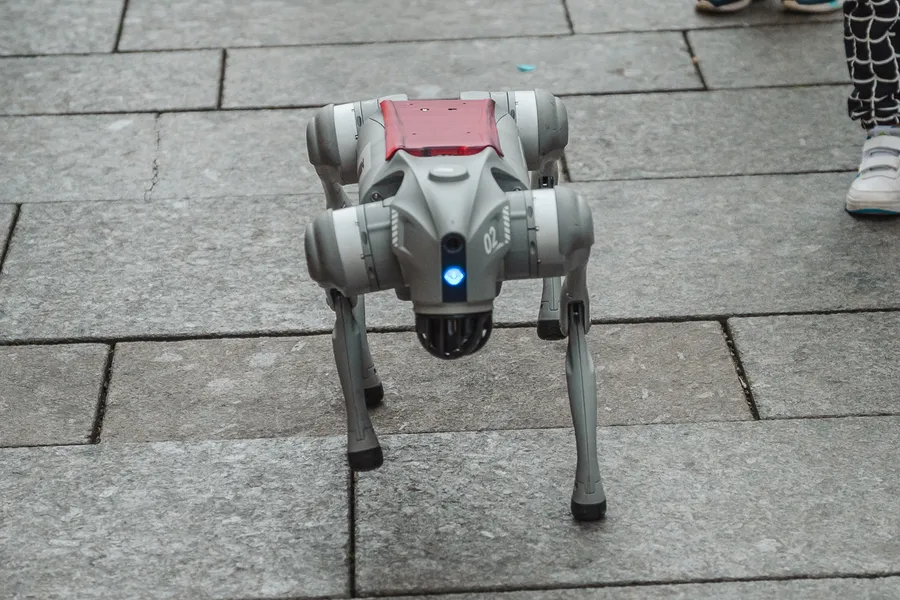
On Unitree's spec page, every version stands 70 by 31 by 40 cm and weighs about 15 kg with its battery, and carries a 4D LiDAR sensor that sees all around the robot. What changes is the rest. The Air walks up to 2.5 m/s and carries about 7 kg, the Pro walks up to 3.5 m/s and carries about 8 kg, and the X reaches 3.7 m/s. The Air's warranty is 6 months, against 12 for the others. Unitree's table also marks the 4G module with GPS, the voice functions and the follow-me system with a filled dot on the Pro and an empty circle on the Air. The table does not explain the symbols, so I would ask what the empty circles mean before buying the Air.
The battery is the number to plan around. The standard 8,000 mAh pack is listed at about 1 to 2 hours, and the larger 15,000 mAh pack on the EDU at about 2 to 4 hours. A spare standard battery is $500 in Unitree's shop, and a long-range one is $700.
The reviewers I read agree on the picture. Faux Hammer calls the Go2 Pro "one of the coolest consumer tech products" it had tried "in years" and also "one of the least essential," a "premium robotics toy" rather than a sensible appliance. NeoTeo finds it agile on curbs, gravel and stairs but unreliable in cluttered rooms, with no arm, so it cannot pick anything up. It reports one U.S. buyer whose Go2 Pro came to $4,017 after shipping and tariffs. That is one buyer's total, not a list price, but it shows why the price on the page is a starting point. Unitree itself warns that some functions need human operation or "secondary development," meaning programming.
My read: for someone who wants to learn robotics or simply enjoys machines, the Pro is the version I would compare first, since the Air has the shorter warranty and fewer features on Unitree's own table. For anyone who wants a household helper, none of the three is one.
What does the Sony aibo cost, and what do you get?
Sony's U.S. store listed the aibo companion robot at $3,199.99 in October 2026. The robot comes with a charging station, an adapter and a pink ball, and with three years of Sony's AI Cloud Plan already paid.
That plan matters more than the box. Sony's page says you need it to enjoy all of the aibo's features: it connects the robot to Sony's servers, stores what it has seen and heard so its personality can develop, includes the mobile connection and backs up its data. After the three years, renewal is $300 a year on Sony's store, and Sony says the fees are not refundable. If the price stays at $300, five years of ownership cost about $3,800 ($3,199.99 plus two renewals).
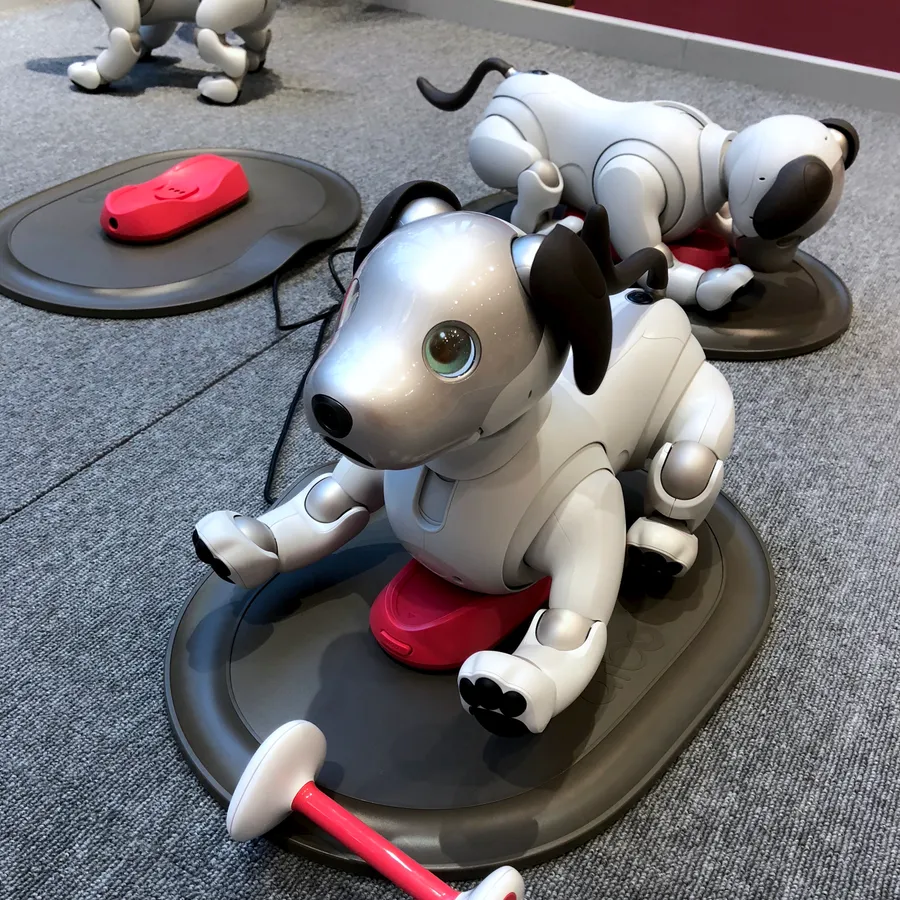
What the robot does is closer to a pet than to a gadget. Sony says it recognizes the people in the house, learns its name, responds to commands and walks back to its charger when it gets tired. Tom's Guide, in a review that lists the $2,899.99 launch price, describes a machine about the size of a chihuahua, around 5 pounds, with smooth movement and an expressive face. The same review found the app sluggish and spent more than six minutes trying to make it sit, and says Sony advises against taking it outdoors because dirt and moisture can damage its joints.
There is also a risk to know about. In late June 2026, Sony said it would end sales of the aibo in Japan once stock runs out, while keeping tech support, replacement parts and the cloud plans. AFP's report said Sony had not answered questions about the United States. Sony's U.S. aibo news page was still posting updates on Nov. 1, 2026, and the store still listed the robot in October, but I would ask about the plan's future before paying for something whose personality lives on Sony's servers.
Can you buy Boston Dynamics' Spot?
Yes, but not like the other two. Boston Dynamics' Spot page has a "Contact Sales" button and no price. The last public figure is from June 2020, when IEEE Spectrum reported that Spot went on sale in the company's online store as the Explorer Kit for $74,500, shipping included, with an extra battery at $4,620. Today the company's shop sells merchandise, such as a pewter Spot replica listed at $199, not robots.
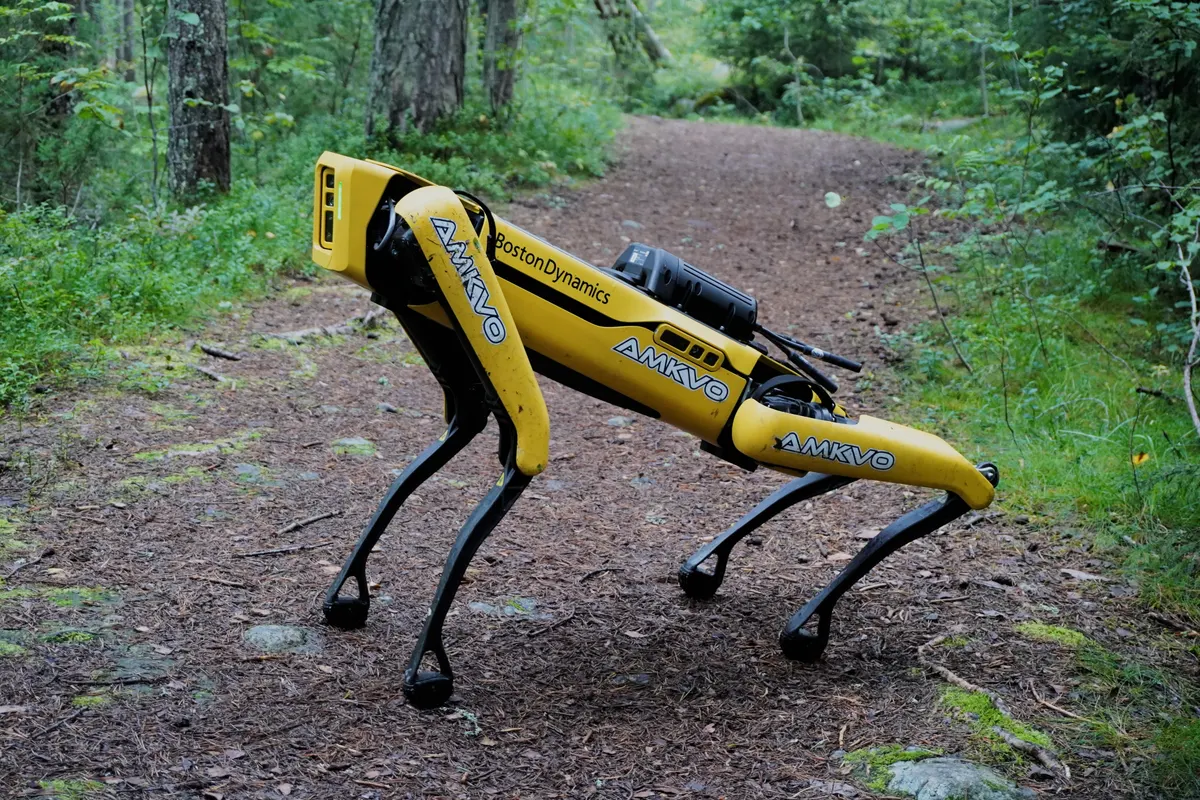
The company is clear about who the robot is for. Its page describes Spot as an agile mobile robot for industrial inspection, used in manufacturing, energy, construction and government work, and says more than 1,500 robots are in customers' hands. Its listed specifications read like a work machine: 33.8 kg (74.5 lb), 1.6 m/s top speed, IP54 dust and water protection, a working range of -20°C to 55°C, a 564 Wh battery with about 90 minutes of average runtime and room for 14 kg of payload. In 2020 the company told IEEE Spectrum it did not want people using Spot at home for fun, and its terms then said the robot was not certified safe for in-home use or near children.
So when you read "a robot dog costs $75,000," that is Spot, and it is not the robot a family buys. It is the one that walks through plants and construction sites while a person watches the data.
How do the three compare side by side?
| Robot | Best described as | Listed price | Ongoing cost | Weight |
|---|---|---|---|---|
| Unitree Go2 | Hobby, education and research robot | $1,600 (Air), $2,800 (Pro), $4,500 (X), before tax and freight; EDU on request | Spare battery from $500; no subscription listed | About 15 kg (33 lb) |
| Sony aibo ERS-1000 | Companion pet | $3,199.99, with a 3-year cloud plan | $300 a year after year three | About 5 lb (2.3 kg), per Tom's Guide |
| Boston Dynamics Spot | Industrial inspection robot | Not published; $74,500 in 2020 | Service plan called Spot Care; price not published | 33.8 kg (74.5 lb) |
Three robot dogs on the makers' pages, read Nov. 2, 2026 (Sony's price from its U.S. store, October 2026).
What can't a robot dog do yet?
Quite a lot, and the videos do not show it. The limits I found on the makers' pages and in the reviews are these:
- Pick things up. The Go2 and the aibo have no arm. Spot sells an arm as an add-on, a separate product on Boston Dynamics' site.
- Run for long. The Go2 is listed at about 1 to 2 hours on the standard battery, and Faux Hammer reports it can shut down and drop to the floor when the charge runs very low. Spot's average runtime is 90 minutes.
- Go anywhere. Sony advises against taking the aibo outdoors. The Go2 handled stairs and gravel in the reviews but stumbled in clutter, and Faux Hammer notes the firmware update needs a dedicated 2.4 GHz Wi-Fi network.
- Think for itself. Unitree's own page says some functions depend on human operation or programming. Mapping and follow modes exist, and the reviews call them useful but limited.
- Replace a dog. Faux Hammer says outright that the Go2 does not replace one. The aibo imitates one, and Tom's Guide found its behavior charming and its training frustrating.
Which robot dog fits which buyer?
If you are curious about robotics and can tolerate a temperamental machine, the Go2 is the one meant for that, and the Air costs less than half of the aibo's five-year total. If you want company and enjoy a gadget with a personality, the aibo is the one made for it, with the plan and the Sony question above in mind. If you run a site that needs inspections, Spot is the one to ask Boston Dynamics about.
If the real goal is getting chores done, a robot dog is the wrong shape. Machines built for one task already work better: my guides to robot vacuums with an arm, laundry-folding machines, wire-free robot lawn mowers and window-cleaning robots cover what you can buy today. For the walking robots with hands that companies promise for the home, including Unitree's own humanoids, see my guide to humanoid home robots.
What should you check before paying for a robot dog?
Five things, all on the maker's page. First, the price basis: Unitree's prices exclude tax and freight, and the one reviewer's total of $4,017 shows what that can mean. Second, the subscription: the aibo's $300 a year is part of the price. Third, the warranty and who repairs it, since the Air has half the Pro's warranty. Fourth, what the robot does out of the box and what needs programming. Fifth, whether the video that made you want it was filmed on the robot you are buying. The checks I use on fake gadget clips, in my guide to spotting them, work on real products too.
Frequently asked questions
How much does a robot dog cost?
Unitree lists the Go2 at $1,600 (Air), $2,800 (Pro) and $4,500 (X) before tax and freight. Sony's aibo was $3,199.99 on its U.S. store in October 2026, with three years of cloud service. Boston Dynamics does not publish a price for Spot, which was $74,500 in 2020.
Can an individual buy a Boston Dynamics Spot?
The company's Spot page only offers "Contact Sales" and lists no price. In 2020 it sold Spot online for $74,500 and said it did not want people using the robot at home for fun, so ask its sales team what it will sell you and for what use.
Is the Sony aibo still sold?
In June 2026 Sony said it would stop selling the aibo in Japan once stock runs out, and keep support, parts and cloud plans. AFP said Sony had not answered questions about U.S. sales. Sony's U.S. store still listed it in October 2026.
Does the Sony aibo need a subscription?
Sony says an AI Cloud Plan is needed to enjoy all of its features. Three years come with the robot, and renewal is $300 a year on Sony's store. Sony says the fees are not refundable.
How long does the Unitree Go2 battery last?
Unitree lists about 1 to 2 hours on the standard 8,000 mAh battery and about 2 to 4 hours on the EDU's 15,000 mAh pack. Faux Hammer describes roughly two hours of use, depending on terrain and speed.
What is the difference between the Go2 Air, Pro and X?
On Unitree's table the Pro is faster (3.5 m/s against 2.5), carries about 8 kg instead of 7, climbs 40° slopes instead of 30° and has a 12-month warranty instead of 6. The Pro also has a filled dot for 4G, voice and follow-me where the Air has an empty circle. The X reaches 3.7 m/s.
Can a robot dog carry things or do chores?
The Go2 can carry about 7 to 8 kg strapped on its back but has no arm, so it cannot pick objects up, as NeoTeo notes. Spot has an optional arm and a 14 kg payload for industrial work. The aibo carries nothing but its toy.
Can a robot dog go outside?
Not all of them. Tom's Guide says Sony advises against taking the aibo outdoors because dirt and moisture can damage its joints. Reviewers took the Go2 over curbs, gravel and stairs, and Boston Dynamics lists Spot as IP54 with an operating range of -20°C to 55°C.
Sources
- Unitree: Go2 (specifications, versions and prices), read Nov. 2, 2026
- Unitree shop: Go2 (prices with and without controller, batteries, accessories), read Nov. 2, 2026
- Sony Electronics U.S. store: aibo (Internet Archive copy saved Oct. 24, 2026; the live store blocks automated reading)
- Sony aibo U.S. site: aibo AI Cloud Plan (included years, renewal price, terms), read Nov. 2, 2026
- Sony Electronics Inc. press release: aibo Espresso Edition in the U.S. (Feb. 15, 2024), read Nov. 2, 2026
- Sony aibo U.S. news page: What's New, read Nov. 2, 2026
- AFP via The Star: Sony discontinues Japan sales of robot puppy aibo (June 26, 2026), read Nov. 2, 2026
- Boston Dynamics: Spot (specifications, "Contact Sales"), read Nov. 2, 2026
- Boston Dynamics shop (merchandise listing), read Nov. 2, 2026
- IEEE Spectrum: Boston Dynamics' Spot Robot Dog Now Available for $74,500 (June 16, 2020), read Nov. 2, 2026
- Tom's Guide: Sony Aibo review (undated; lists the $2,899.99 launch price), read Nov. 2, 2026
- Faux Hammer: UniTree Go 2 Pro review (undated), read Nov. 2, 2026
- NeoTeo: Unitree Go2 Pro review, read Nov. 2, 2026

Founder and editor, Novaverum
I write Novaverum to separate the technology you can really buy from the demos, concepts and viral fakes, starting from what the companies, regulators and engineers publish. Every article lists its sources at the end.