Home & Robots
Why Can't You Buy a Laundry-Folding Machine Yet?
Quick answer
Because the two home machines that came closest never reached stores. FoldiMate stopped operating in 2021, and the maker of Laundroid, a $16,000 prototype, went bankrupt in 2019. Folding soft, tangled clothes is still one of the hardest jobs for a robot. In 2026, the closest options are commercial folders for laundries and humanoid home robots such as 1X's NEO, sold for $20,000 or $499 a month.
On this page
Few chores get as many "someone should invent a machine for this" wishes as folding laundry. Someone did, more than once. Two of the best-known attempts were shown at the biggest tech fairs in the world, collected preorders and media attention, and then disappeared.
Here is what happened to them, why folding is so much harder for a machine than washing or drying, and what you can actually get in 2026.
Can you buy a laundry-folding machine today?
Not as a simple home appliance from a company that has shipped one. The two machines most people remember, FoldiMate and Laundroid, never reached stores. Both were real prototypes, not renders, and both were years behind their own launch dates when the companies behind them stopped.
Folding machines do exist, but they are built for commercial laundries, and the newest option for homes is a very different kind of product: a humanoid robot that does many chores, laundry among them, at the price of a small car.
What happened to FoldiMate?
FoldiMate was an American company founded in 2010. It showed its first prototype in 2016, then at CES in 2017, and an updated version at CES 2018. The goal was to reach the market by the end of 2019. In July 2021, it became clear the company would cease operations, according to the Wikipedia entry on laundry-folding machines.
The machine was not the "throw in a pile" robot many people imagine. You fed each garment in by hand, one at a time. Which? described clips at the front where you attached each item, then "mysterious inner mechanisms" folded it and dropped it in a tray. FoldiMate's target was a load of 25 items in less than five minutes, and Which? reported an estimated launch price of $980 in January 2019. It never went on sale.
What happened to Laundroid?
Laundroid, from the Japanese company Seven Dreamers, was more ambitious. It was meant to wash, dry, iron and fold clothes, then move them into an integrated wardrobe. It was first shown at CEATEC in 2015 as the world's first robot that could wash and fold clothes, with backing from Daiwa House and Panasonic. The launch was planned for 2017, then moved to 2019.
In April 2019, Seven Dreamers filed for bankruptcy. Ubergizmo reported a price of $16,000, a plan to bring it down to $2,000, and a folding time of "a couple of hours" for a load. Reported debts ranged from about $20 million (Ubergizmo) to roughly $22 million (TechCrunch). TechCrunch summed up hands-on reports this way: the product had too many rough edges and was "struggling with even basic tasks," while being too large and expensive for most buyers.
Why is folding clothes so hard for a machine?
Because clothes have no fixed shape. A washing machine and a dryer treat a load as one mass. Folding means finding the sleeves, collar and edges of each piece, and a shirt can land in a pile in endless positions. The robotics startup Physical Intelligence put it plainly in October 2024: laundry folding is "exceptionally difficult for robots" because "a pile of tangled laundry can be crumpled in many different ways."
That is why the commercial machines that work handle the easy cases. Unimac, a maker of laundry equipment, sells sheet folders and towel folders for flat items such as sheets, duvets, table linen and towels, with feeding that ranges from manual to automatic. Flat, square items are predictable. A child's T-shirt inside out is not.
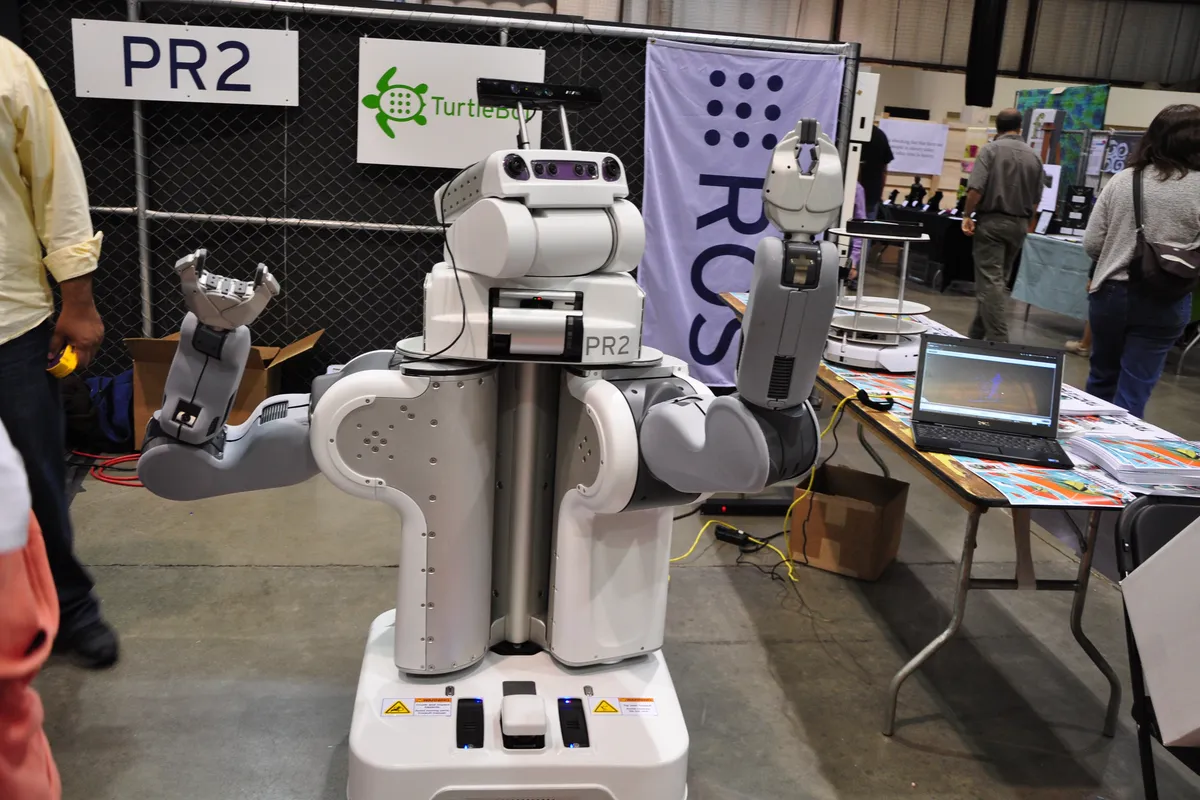
Researchers have been working on the hard part for years. In 2010, a UC Berkeley team led by Pieter Abbeel used a prototype PR2 robot from Willow Garage to fold towels it had never seen before, and it succeeded in 50 out of 50 trials. The robot turned each towel with one arm and then the other while two cameras looked for two adjacent corners, then folded it on a table and stacked it. The bottleneck, the team said, was getting a towel from a random pile into a known shape.
Research robots are getting closer to real clothes. In the 2024 post, Physical Intelligence showed its π0 model on a robot that could unload a dryer, carry the clothes to a table and fold them into a stack, recovering when someone interfered. The company wrote that, to its knowledge, no earlier robot had done this task at that level of complexity. That was a research demo, not a product you can order.
Can a home robot like NEO fold your laundry?
This is where the idea is heading: instead of a box that only folds, a general home robot that does many chores. The best-known example in 2026 is NEO, from the company 1X. On its official order page, NEO costs $20,000 to own (Early Access) or $499 a month as a subscription, with a $200 deposit that 1X says is fully refundable until the robot is ready for delivery. 1X says U.S. deliveries begin in 2026, starting with Early Access buyers, and international deliveries come later. The robot is 5 feet 6 inches tall and weighs 66 pounds.

Laundry is on the list, with an important detail. 1X places it among the tasks in its "Scheduled Expert Mode": for complex chores NEO doesn't know yet, an Expert from 1X can remotely supervise it at scheduled times to help it learn. 1X says owners have to schedule and accept each session, the robot's ear rings change color while an Expert is connected, and the Experts are 1X employees in the U.S. So NEO is sold as a robot that can help with laundry, not as a machine that promises to fold any pile on its own from day one.
How can you spot a fake laundry-folding machine ad?
Because people want this machine so much, it is a favorite subject for ads and viral videos. Before you pay, check a few things:
- The company still exists. FoldiMate ceased operations in 2021 and Seven Dreamers went bankrupt in 2019. A machine sold today under either name is not coming from the original company.
- The price makes sense. The only real home machines were estimated at $980 (FoldiMate) and $16,000 (Laundroid), and neither shipped. A robot that folds a whole pile for a couple of hundred dollars would be a bigger breakthrough than anything the research labs have shown.
- The video shows a real product. A machine that swallows a messy heap and drops out perfect stacks in seconds goes far beyond what any company has demonstrated. Look for the same product on the maker's own site, with an address, a support page and reviews from known publications.
- It says how you feed it. Real folders either need each item fed in by hand or are built for flat items like towels and sheets.
When will you be able to buy one?
No company with a shipping product has announced a simple home folding appliance with a firm date. The most concrete step in 2026 is the arrival of home robots such as NEO, which bring folding closer as part of a much larger and more expensive package.
For now, the realistic picture is this: towel and sheet folders for businesses, research robots that are learning fast, and a first generation of home humanoids that still get help from a remote human for harder jobs. A cheap box that folds your family's laundry by itself is still a prototype idea.
Frequently asked questions
Is FoldiMate still available?
No. FoldiMate showed prototypes from 2016 to 2018 and aimed to launch by the end of 2019, but in July 2021 it became clear the company would cease operations. It never went on sale.
How much did the Laundroid cost?
Laundroid was reported at $16,000, with a plan to bring the price down to $2,000. It never reached the market: its maker, Seven Dreamers, filed for bankruptcy in April 2019.
Is there a machine that folds towels and sheets?
Yes, for businesses. Commercial laundry equipment makers such as Unimac sell sheet folders and towel folders for flat items like sheets, duvets, table linen and towels. They are built for laundries, not homes.
How much does the 1X NEO home robot cost?
On 1X's order page, NEO costs $20,000 to own (Early Access) or $499 a month as a subscription, with a $200 deposit that 1X says is fully refundable until delivery. U.S. deliveries begin in 2026.
Does NEO fold laundry by itself?
1X lists laundry among the tasks in its Scheduled Expert Mode, where a 1X Expert can remotely supervise the robot at times the owner schedules and accepts. The company doesn't promise that NEO will fold any load on its own from the start.
Why did the first laundry-folding robots fail?
Hands-on reports said Laundroid struggled with even basic tasks and was too large and expensive, and its maker ran up debts of around $20 million. Clothes have no fixed shape, which makes folding one of the hardest chores to automate.
Sources
- Wikipedia: Laundry-folding machine (FoldiMate and Laundroid history), read Oct. 20, 2026
- TechCrunch: The company behind Laundroid files for bankruptcy (Apr. 23, 2019)
- Ubergizmo: Company that made $16,000 laundry folding robot goes bankrupt (Apr. 24, 2019)
- Berkeley News: Researchers develop a robot that folds towels (Apr. 2, 2010)
- Which?: Meet the new machine that folds your laundry for you (Jan. 14, 2019)
- Physical Intelligence: π0, our first generalist policy (Oct. 31, 2024)
- 1X: NEO home robot, features and FAQ, read Oct. 20, 2026
- 1X: NEO order page (prices and deposit), read Oct. 20, 2026
- Unimac: Commercial laundry folders and feeders

Founder and editor, Novaverum
I write Novaverum to separate the technology you can really buy from the demos, concepts and viral fakes, starting from what the companies, regulators and engineers publish. Every article lists its sources at the end.