Reality Check
Free Energy Generators: Why They Can't Work
Quick answer
No. Energy is neither created nor destroyed, so a machine that puts out more energy than it takes in cannot exist. The magnet motors and self-running generators in the videos either hide a power source or lose energy as heat until they stop. When a federal appeals court reviewed one such machine in 1989, the government's tests showed it did not produce more energy than it used.
On this page
- Can a free energy generator really work?
- Why can't a magnet motor run forever?
- Has a free-energy machine ever been tested for real?
- Is this a new kind of trick?
- But isn't solar power free energy? And heat pumps?
- How does the pitch usually work?
- How can you check a free-energy claim in two minutes?
- FAQ
- Sources
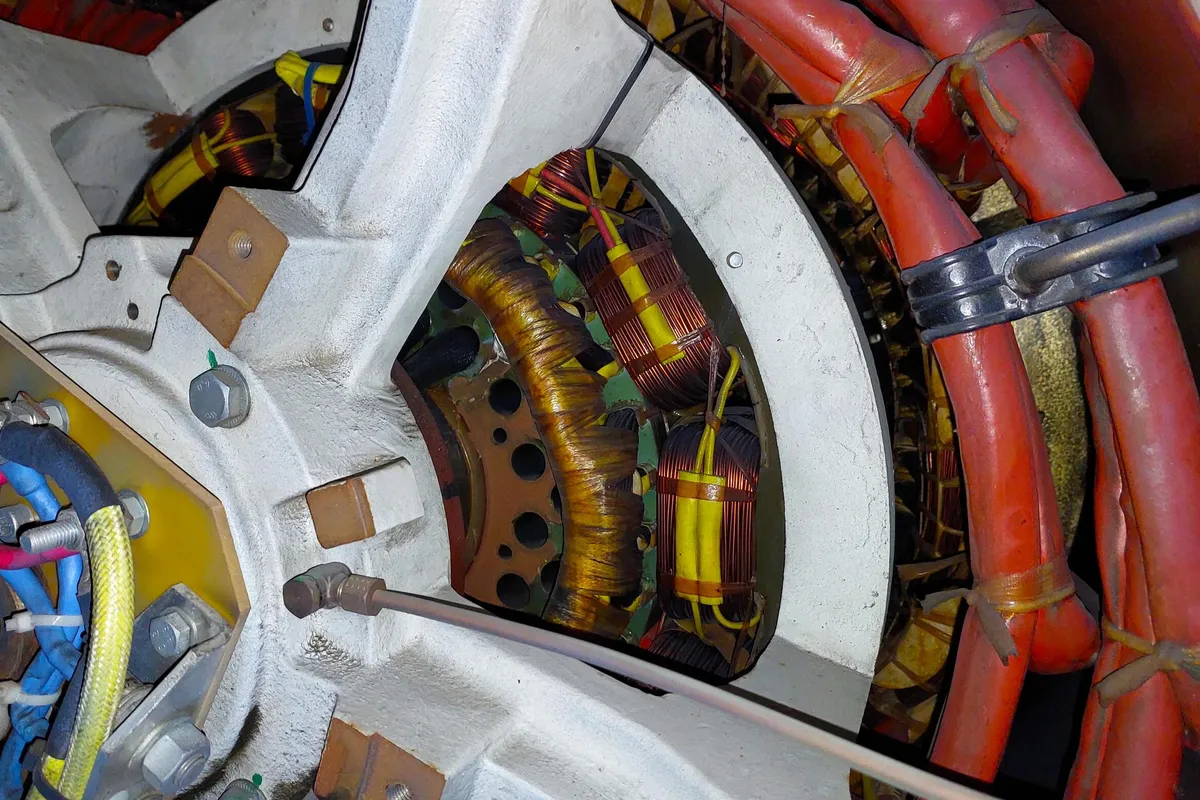
The clip is short. A wheel of magnets spins on a bench. A small motor turns a generator, a bulb glows, and no plug is in sight. The voice-over says the machine powers itself, and that the technology is being kept from you. The wheel is really turning. The bulb is really lit. What the clip leaves out is where the energy comes from.
This article applies the checks from our guide to spotting a fake gadget video to one of the oldest promises in invention: power with nothing going in. Every fact below comes from an official or primary source listed at the end.
Can a free energy generator really work?
No. The U.S. Energy Information Administration (EIA) puts the rule in one sentence: "the law of conservation of energy says that energy is neither created nor destroyed." NASA's Glenn Research Center says the same: within a system, "the amount of energy remains constant and energy is neither created nor destroyed."
A generator can only change energy from one form to another. It cannot make any. A machine that gives out more than it takes in would be creating energy, which is the one thing the rule rules out.
| What the video shows | What is really going on |
|---|---|
| A wheel of magnets that keeps turning | Static magnetic forces are conservative: after one full turn, the net work is zero (Harvard). Most such wheels coast to a stop. |
| A motor driving a generator that feeds the motor | Each step wastes some energy as heat, and the EIA notes that converting energy always involves some unusable energy. |
| A bulb lit with no plug | A battery, a hidden wire or a stored charge can light a bulb for a while. It proves the bulb works, not that the box makes power. |
| "The inventor was shut down" | A story, not a measurement. A working machine can be tested by an independent lab. |
What a "free energy" video shows, and what is really going on. Sources: EIA, NASA, Harvard, the Federal Circuit and the FTC pages listed at the end.
Why can't a magnet motor run forever?
Because a magnet gives back exactly what it takes. In a course handout on perpetual motion, Harvard mathematician Oliver Knill explains that the line integral of a force along a closed curve is zero when the force field is a gradient field, so "the work done along a closed path is zero." He adds that "all physical experiments so far confirm that static force fields in our universe" are of that kind. In plain words: a magnet can pull a part forward, but to bring the part back to where it started, the magnets pull it back by the same amount.
The handout also describes the oldest trick in the book: "an electric motor which turns a generator whose electricity is used to power the motor." It says that in all such ideas "there is a twist like some kind of gear or change of voltage which confuses a naive observer." Its conclusion is direct: "The first law of thermodynamics forbids the existence of such a machine."
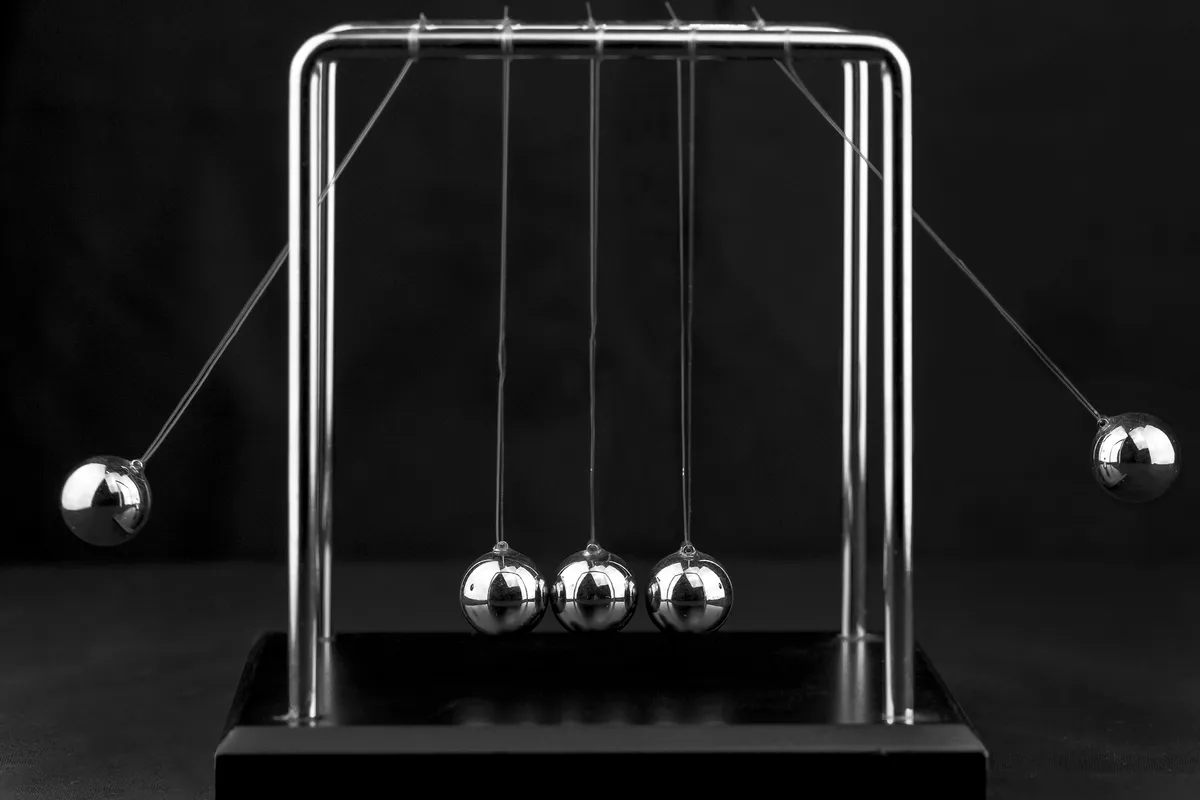
You can see the same thing on a desk. A Newton's cradle, the toy with the swinging steel balls, looks as if it could click forever. It slows and stops because every collision turns a little of the energy into heat and sound. That is the same loss the EIA describes, and it is why a spinning wheel never gets faster on its own.
Has a free-energy machine ever been tested for real?
Yes, and the result was always the same. The best-documented case is in a U.S. court. Joseph Newman applied for a patent on a device he called an "Energy Generation System Having Higher Energy Output Than Input." The Patent Office rejected it, and the case ended at the U.S. Court of Appeals for the Federal Circuit, which decided it on July 5, 1989.
The court had the device tested by the National Bureau of Standards, now called NIST. According to the opinion, the Bureau's report "concluded that the device did not produce more energy output than input," with efficiency measured "between 27 and 77 percent." An efficiency below 100 percent means the machine gave out less than it took in. The court agreed that the application should be refused, writing that "the laws of thermodynamics do not brook contradiction." It also noted that those laws "do not require closing of either the scientific or the judicial mind." The door stays open to evidence, as long as it is measured.
The U.S. Patent and Trademark Office has a rule built around this problem. Its Manual of Patent Examining Procedure says that "with the exception of cases involving perpetual motion, a model is not ordinarily required by the Office" to show that an invention works. So an application for a perpetual motion machine can be asked for a working model, and it is rare for anyone to produce one that keeps its promise.
Is this a new kind of trick?
No. Fake machines have been sold for more than two centuries. In 1812, Charles Redheffer showed what he said was a perpetual motion machine in Philadelphia and charged admission to see it. The label on a model of it at the Franklin Institute says it was exposed as a scientific hoax by Nathan Sellers. A 1961 American Heritage account by Clifford B. Hicks gives the detail: Sellers' son Coleman noticed that the gear teeth were worn on the wrong side, as if the machine was being driven rather than driving.
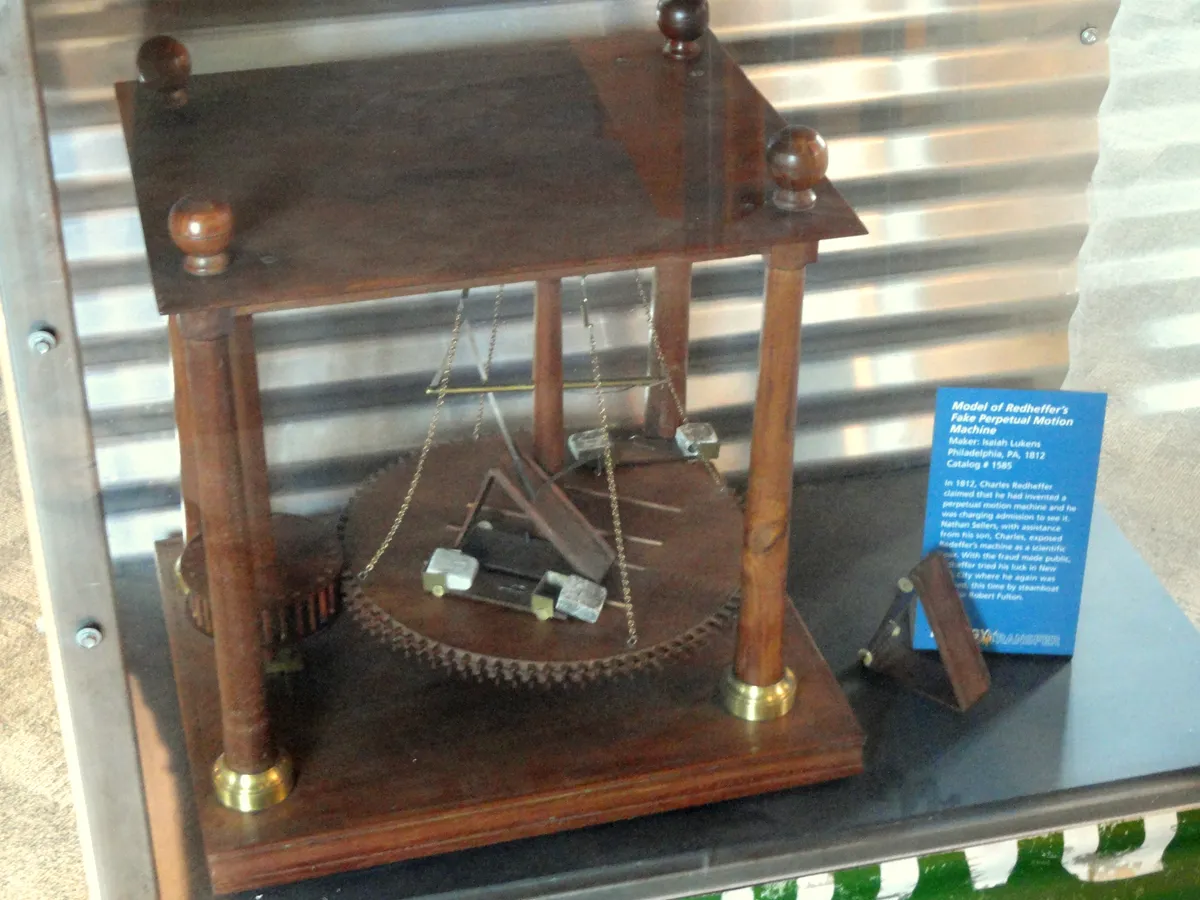
When Redheffer moved to New York, the steamboat inventor Robert Fulton looked at it and said, according to the article, "Why, this is a crank motion." He pulled away the wood holding the device to the wall and found a loop of catgut moving at a steady pace. Traced upstairs, it led to a man turning a crank. The "free" power was a person.
But isn't solar power free energy? And heat pumps?
Both are real, and neither creates energy. Sunlight and wind cost nothing, but the panels, turbines and installation do. The Federal Trade Commission (FTC) warned in August 2024 that "free" or "no cost" solar panel offers are scams, and that anyone who pressures you into a contract or demands up-front or immediate payment is a scammer.
A heat pump is a closer case. ENERGY STAR explains that a heat pump water heater uses electricity "to move heat from one place to another instead of generating heat directly." The heat was already in the surrounding air. The machine only moves it, which is why it can deliver more heat than the electricity it draws without breaking any rule. If you want the numbers for a home, The Cost of Home compares a heat pump with a gas furnace.
How does the pitch usually work?
It usually starts with a demonstration and ends with a payment. The FTC has acted on this pattern. In April 2012 it announced it had halted an alleged scheme whose ads for a "free" book promised how to get "free gas for life," how to put solar panels on your roof for free, and how to make your electricity meter "go backwards paying you." The defendants agreed to refund nearly $2 million to consumers. The ads were about free energy. The money came from the people who clicked.
That is the safer way to read any free-energy offer: the thing being sold is not a machine, it is the plan, the kit or the membership. For more on the other warning signs, see our check on water-powered cars, which follows the same method, and the other pieces in Reality Check.
How can you check a free-energy claim in two minutes?
Ask three questions.
- Where does the energy come from? Look for a fuel, a battery, the sun, the wind or a wall socket. If nothing is going in and the clip never shows an input meter next to an output meter, the demonstration is incomplete.
- Who measured it? A real result can go to an independent lab, as Newman's machine did. A claim that only runs on the seller's bench is a demonstration.
- What is being sold? A finished product with a price, a support contact and a company record is one thing. A "secret plan" or "blueprint" is another. The FTC's advice applies to both: be wary of anyone who demands immediate payment.
If you paid and were misled, report it to the FTC at ReportFraud.ftc.gov and ask your card issuer whether you can dispute the charge.
Frequently asked questions
Can a free energy generator work?
No. The EIA says the law of conservation of energy means energy is neither created nor destroyed. A machine can change energy from one form to another, but it cannot put out more than it takes in.
Why can't a magnet motor run on its own?
Static magnetic forces are conservative. In a Harvard course handout, Oliver Knill explains that the work done along a closed path in such a field is zero, so a magnet that pulls a part forward pulls it back the same amount on the return. Real magnet motors coast to a stop.
What is "over-unity"?
It is a name for a device said to give out more energy than it takes in, which the first law of thermodynamics rules out. When the National Bureau of Standards tested Joseph Newman's machine for a federal court, it measured an efficiency between 27 and 77 percent, meaning it gave out less than it took in.
Is a heat pump "over-unity" because it delivers more heat than it uses in electricity?
No. ENERGY STAR says a heat pump water heater uses electricity to move heat from one place to another instead of generating heat directly. The extra heat was already in the air or the room, so no energy is created.
Is solar power free energy?
The sunlight is free, but panels and installation are not. The FTC warned in August 2024 that "free" or "no cost" solar panel offers are scams.
Why do patents exist for perpetual motion machines?
A patent does not prove a device works. The patent manual says a model is not ordinarily required, except in cases involving perpetual motion, so the Office can ask an applicant to show a working one.
Could physics be wrong someday?
Science stays open to evidence. In the Newman case, the court wrote that the laws of thermodynamics do not require closing the scientific or judicial mind, but that they also "do not brook contradiction." Any new claim needs a measured result from an independent test.
Where do I report a fake free energy ad?
Report it to the FTC at ReportFraud.ftc.gov. If you paid by credit card, ask your card issuer whether you can dispute the charge.
Sources
- U.S. Energy Information Administration: Laws of energy (page has no date), read Oct. 27, 2026
- NASA Glenn Research Center: First Law - Conservation of Energy (last updated July 18, 2024), read Oct. 27, 2026
- O. Knill, Harvard Math 21a: Perpetual Motion Machines (course handout, spring 2003 archive), read Oct. 27, 2026
- U.S. Court of Appeals for the Federal Circuit: Newman v. Quigg, 877 F.2d 1575 (July 5, 1989), read Oct. 27, 2026
- USPTO: Manual of Patent Examining Procedure, section 608.03 "Models, Exhibits, Specimens" [R-08.2012], read Oct. 27, 2026
- Clifford B. Hicks, "Why Won't They Work?", American Heritage, April 1961, read Oct. 27, 2026
- FTC Consumer Alerts (Aug. 7, 2024): How to avoid getting burned by solar or clean energy scams, read Oct. 27, 2026
- FTC press release (April 16, 2012): action halts alleged "free gas for life" scam, read Oct. 27, 2026
- ENERGY STAR: How a heat pump water heater works, read Oct. 27, 2026
- ReportFraud.ftc.gov, read Oct. 27, 2026

Founder and editor, Novaverum
I write Novaverum to separate the technology you can really buy from the demos, concepts and viral fakes, starting from what the companies, regulators and engineers publish. Every article lists its sources at the end.