Wearables & Gadgets
Smart Glasses in 2026: What They Do and What They Cost
Quick answer
Smart glasses in 2026 come in four kinds: camera glasses, audio-only glasses, glasses with a small display and AR glasses with big virtual screens. Meta's Ray-Ban Meta start at $449, its Audio model at $349 and the Display at $799. XREAL's Aura ($1,279) and Snap's Specs ($2,195) are pre-orders, and Google and Samsung have not priced theirs.
On this page
- What kinds of smart glasses can you buy in 2026?
- What do camera glasses do, and what do they cost?
- Are audio-only smart glasses enough?
- What do glasses with a display add?
- What are AR glasses like XREAL Aura and Snap Specs?
- Which smart glasses are on sale, and which are only announced?
- What should you know about privacy before wearing a camera?
- What should you check before buying?
- Which smart glasses fit which person?
- FAQ
- Sources
A few years ago smart glasses meant a camera on your face and a lot of awkward questions. In 2026 the idea has split into several different products, from sunglasses that only play music to glasses that put a screen in front of your eye. They are sold at very different prices, and some of the ones getting attention cannot be bought yet. This guide sorts them by what they actually do and what the makers charge.
Prices and specifications come from the companies' own pages and announcements, read on October 22, 2026. Each source is listed with its date at the end.
What kinds of smart glasses can you buy in 2026?
There are four, and the price rises with how much the glasses try to do. The names get confusing because the makers call all of them "AI glasses" or "smart glasses."
| Kind | What it does | Examples and starting price |
|---|---|---|
| Camera glasses | Photos and video, calls, music and an AI assistant you talk to | Ray-Ban Meta (Gen 3) from $449; Oakley Meta from $399 |
| Audio-only glasses | Music, calls and the assistant, with no camera | Ray-Ban Meta Audio, $349 |
| Display glasses | A small screen in the lens for directions, messages and captions | Meta Ray-Ban Display from $799; Even G2 from $599 |
| AR glasses | A large virtual screen or apps placed around you | XREAL Aura from $1,279; Snap Specs $2,195 |
The four kinds of smart glasses and the official starting prices, as listed by the makers on Oct. 22, 2026.
What do camera glasses do, and what do they cost?
Camera glasses look like normal sunglasses or eyeglasses with a lens at each corner. You say "Hey Meta" or press a button to take a photo, record video, make a call or ask a question, and the sound comes from small open-ear speakers, so you can still hear what is around you. They have no screen. Everything you see back, you see later in a phone app.
Meta's Ray-Ban Meta (Gen 3), announced on September 23, 2026, starts at $449. Meta lists a 12-megapixel camera, 3K Ultra HD video, a six-microphone array, a customizable action button and up to nine hours of battery, one hour more than the previous generation. Meta's May 2026 buying guide listed the earlier Ray-Ban Meta from $379, so the new one costs $70 more at the entry point.
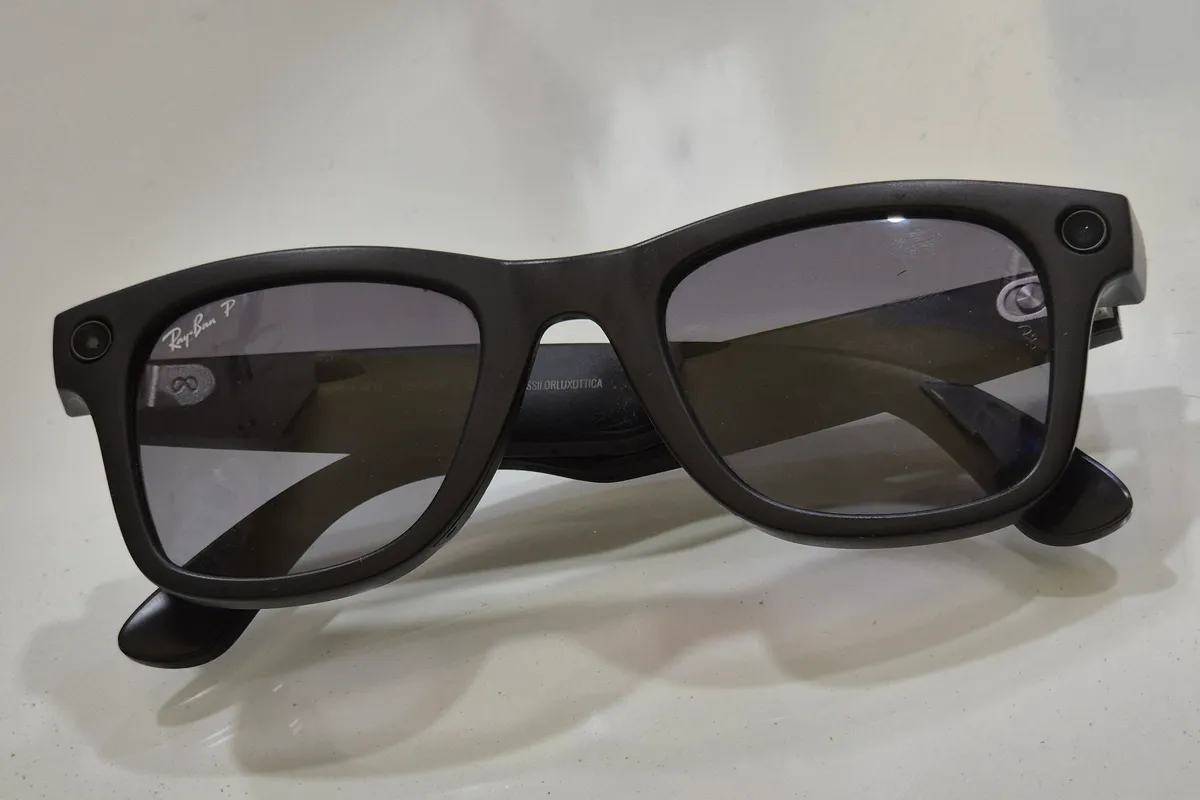
Meta sells sport versions too. Its guide lists Oakley Meta HSTN from $399, with an IPX4 water-resistance rating, and Oakley Meta Vanguard from $499, with a wraparound design, an IP67 rating and a camera in the center of the frame. At the cheap end, Meta said on September 23 that its Meta Adventurer starts at $249 and goes on sale October 23.
Are audio-only smart glasses enough?
For many people they are. Ray-Ban Meta Audio, Meta's first audio glasses, opened for pre-order on September 23 at $349, with shipping set for October 13. They weigh 43 grams and Meta lists up to 12 hours of battery, plus up to 48 more hours from the case. They play music and podcasts, take calls and answer the assistant, and come in the Clubmaster and Burbank styles.
The trade-off is simple: no camera means no photos, but also nothing for the people around you to worry about. If your main use would be music, calls and quick questions, this is the cheapest way into the category from a big brand.
What do glasses with a display add?
A screen in the lens, so you can see an answer instead of only hearing it. Two are on sale in the United States.
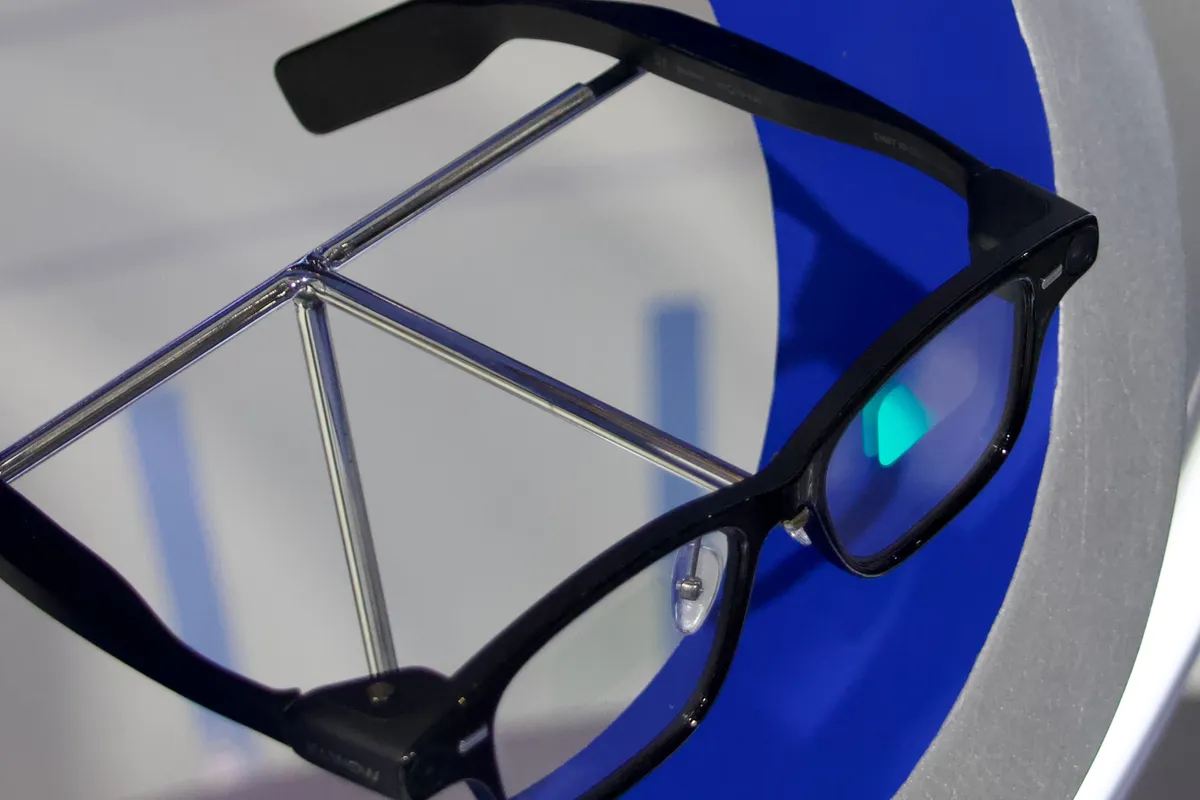
Meta Ray-Ban Display. It starts at $799 in the U.S., and Meta's launch post says that price includes the Meta Neural Band, a wristband that you use to control the glasses with small finger movements. The same page says the display is monocular and sits off to the side so it does not block your view, that the glasses weigh 69 grams and that they last up to six hours of mixed use, or up to 30 hours with the case. The band lasts up to 18 hours. On the display you can read messages, follow walking directions, see live captions and translation and frame photos in a viewfinder. Meta says the display leaks only 2% of its light, so people next to you are unlikely to see it.
On September 23, 2026, Meta said the Display can now be ordered online in the U.S. and went on sale in the UK from £749 and Canada from CA$1,149. Pre-orders in France, Italy and Germany start at €899, with availability on October 13. Meta's help page lists those six markets as the ones where the Display and Neural Band are supported.
Even Realities G2. It costs $599 for the frame, and prescription lenses start at $159 on top. The company stresses what it leaves out: the G2 has no camera. Its page lists a teleprompter, translation in 35 languages, turn-by-turn directions, notifications and an assistant, in a frame that weighs 36 grams with up to two days of battery. The case holds enough charge for seven more. A ring that controls the G2 is sold separately. Even Realities takes returns of non-prescription pairs within 14 days, but prescription pairs are made to order and cannot be returned.
What are AR glasses like XREAL Aura and Snap Specs?
AR glasses go further: they place a large virtual screen or apps in the space around you. They are bulkier and cost more, and both main models in the U.S. are still pre-orders.
XREAL's Aura runs Android XR and comes with a separate pocket-size "puck" that does the processing. XREAL lists a 70-degree field of view, a weight of 95 grams and a micro-OLED display, and says you can use up to five virtual screens. Its U.S. shop lists $1,279 for the 12 GB model and $1,499 for the 16 GB one as full-payment pre-orders, with shipping "expected to begin before the holidays" in the U.S., Canada, Japan and South Korea. XREAL's own page says the base model's final price will not exceed $1,500, before tax.
Snap Specs are priced at $2,195, with a $200 refundable deposit to reserve a pair. Snap announced them on June 16, 2026, and says they are fully standalone, with no puck and no tether. They weigh 132 or 136 grams, depending on size, with a 51-degree field of view and up to four hours of mixed use. The charging case brings that to about 20 hours. Snap expects to ship this fall in the U.S., the UK and France. It also lists a $2,395 Connected Case bundle and says it is working with Verizon on data plans and in-store demos in the U.S.
Which smart glasses are on sale, and which are only announced?
Use three labels, as with any new gadget:
- On sale: a price, a buy button and shipping. Ray-Ban Meta, Oakley Meta, Meta Ray-Ban Display and Even G2 are here. Ray-Ban Meta Audio is a pre-order with an October 13 ship date.
- Pre-order or reservation: you pay or leave a deposit, and the product arrives later. XREAL Aura and Snap Specs are here.
- Announced: a name and a date range, with no price. Google and Samsung's first glasses are here.
Google said on May 19, 2026, that its first audio glasses, made with Samsung and the eyewear brands Gentle Monster and Warby Parker, are coming this fall and will work with both Android and iPhone. It also said display glasses are planned, without giving a date. Samsung's May 20 post says the first collections will launch "in select markets" this fall. Neither company has given a price.
If a video shows glasses doing something none of these companies list, check it first. Our guide to spotting a fake gadget video shows how.
What should you know about privacy before wearing a camera?
Meta says its glasses have a Capture LED that lights up when you take photos or record video, so people nearby can tell, and that you get a notification if someone covers it. The company says the camera will not work unless the LED is clear. The Meta AI app is required to use the glasses.
The decision is also social. Some shops, gyms and offices limit cameras, so check the rules wherever you plan to wear them. If you want smart glasses with no camera at all, audio-only models and the Even G2 exist for that reason.
What should you check before buying?
- Your phone and app. Meta's glasses need the Meta AI app. Google says its glasses will pair with Android and iOS.
- Your prescription. Meta lists prescription-ready styles, and Even Realities sells prescription lenses from $159, with no returns on those pairs.
- Your country. The Display is supported in six markets. XREAL's Aura targets the U.S., Canada, Japan and South Korea first.
- The battery claims. Meta lists 9 hours for Ray-Ban Meta (Gen 3), 12 for the Audio model and up to 6 for the Display. AR glasses run on a puck or a case, so read what that adds.
- The date. A pre-order is a promise, and the price on the page can change. Several of these announcements are only weeks old.
The same three labels work for the home robots we covered earlier, in our guide to which humanoid robots you can buy.
Which smart glasses fit which person?
If you want something that looks like normal glasses and plays music, takes calls and answers questions, the $349 Ray-Ban Meta Audio is the simplest start. If you want to record what you see, Ray-Ban Meta (Gen 3) from $449 and the Oakley models are the established choice. If you want answers on a screen, Meta's Display at $799 and the camera-free Even G2 at $599 are the two you can order. And if you want a giant virtual screen, XREAL Aura and Snap Specs are worth following once they begin shipping. Google and Samsung are the ones to watch for a price.
Frequently asked questions
How much do smart glasses cost in 2026?
Meta lists Ray-Ban Meta Audio at $349 and Ray-Ban Meta (Gen 3) from $449. Glasses with a display start at $599 (Even G2) and $799 (Meta Ray-Ban Display). AR glasses start at $1,279 for XREAL Aura and $2,195 for Snap Specs.
What is the difference between smart glasses and AR glasses?
Smart glasses usually have a camera, speakers and an assistant, and some add a small display. AR glasses place a large virtual screen or apps around you, and they are bulkier and cost more.
Do smart glasses need a phone?
Meta says its Meta AI app is required to use its glasses. Google says its first glasses will pair with both Android and iOS phones. Snap says Specs are fully standalone, with no puck and no tether.
Can I get prescription lenses in smart glasses?
Often yes. Meta lists prescription-ready styles, and Even Realities sells prescription lenses for the G2 from $159. Even Realities does not take returns on prescription pairs, because they are made to order.
Do smart glasses record people without them knowing?
Meta says its glasses have a Capture LED that lights up when you take photos or video, and that you get a notification if it is covered. Audio-only glasses and the Even G2 have no camera.
When will Google and Samsung smart glasses launch?
Google and Samsung said in May 2026 that the first audio glasses will launch this fall in select markets, with Gentle Monster and Warby Parker styles. Neither company has announced a price or an exact date.
Sources
- Meta: Introducing Ray-Ban Meta Audio and More AI Glasses Styles (Sept. 23, 2026)
- Meta: Making Meta Ray-Ban Display More Useful to More People (Sept. 23, 2026)
- Meta: Meta Ray-Ban Display launch post (2025), read Oct. 22, 2026
- Meta Help: Meta Ray-Ban Display and Neural Band supported countries, read Oct. 22, 2026
- Meta: Which AI Glasses Are Right for You? (May 8, 2026, updated June 26, 2026)
- Meta: Ray-Ban Meta (Gen 3) product page, read Oct. 22, 2026
- Google: Intelligent eyewear with Gemini is coming this fall (May 19, 2026)
- Samsung: Samsung and Google Give First Look at New Intelligent Eyewear (May 20, 2026)
- XREAL: AURA (specifications and reservations), read Oct. 22, 2026
- XREAL US shop: AURA (prices and pre-order terms), read Oct. 22, 2026
- Snap: Introducing SPECS Augmented Reality Glasses (June 16, 2026)
- Even Realities: Even G2 smart glasses, read Oct. 22, 2026
- Even Realities: Even G2 A (price, lenses, returns), read Oct. 22, 2026

Founder and editor, Novaverum
I write Novaverum to separate the technology you can really buy from the demos, concepts and viral fakes, starting from what the companies, regulators and engineers publish. Every article lists its sources at the end.